A special educational needs support plan is designed to help children with learning difficulties receive customized support in school. This article explains what a SEN support plan is and provides strategies to create and maintain an effective plan tailored to your child’s needs.
Key Takeaways
Special Educational Needs (SEN) encompass a range of learning difficulties and disabilities that require tailored intervention to ensure academic equality and social development.
Creating a successful SEND support plan involves thorough assessments, setting SMART targets, and regular collaboration between educators, parents, and specialists to adapt support as needed.
Monitoring and reviewing progress through a structured four-part cycle (Assess, Plan, Do, Review) is essential for ensuring that support remains effective and aligned with the evolving needs of the child.
Understanding Special Educational Needs (SEN)

Special Educational Needs (SEN) refer to learning difficulty or disabilities that require additional support in educational settings. Children identified with SEN often face challenges in learning compared to their peers, which may hinder their ability to access standard educational resources. Conditions such as autism, dyslexia, and ADHD fall under the umbrella of special educational needs. Emotional and behavioral difficulties also qualify as SEN, necessitating targeted support to help these children succeed.
Recognizing and addressing special educational needs is vital. Children and young people with SEN require specialized interventions to bridge the gap between their current abilities and educational expectations. Without appropriate support, these children and a young person might struggle to keep up with their peers, leading to long-term educational and social implications.
Schools must maintain comprehensive documentation, such as a SEN Information Report, to outline the expertise available within the school and ensure the needs of SEN students are met. This report is crucial for parents and educators to understand the support mechanisms in place and to ensure that the necessary resources are effectively utilized.
Steps to Creating a SEN Support Plan
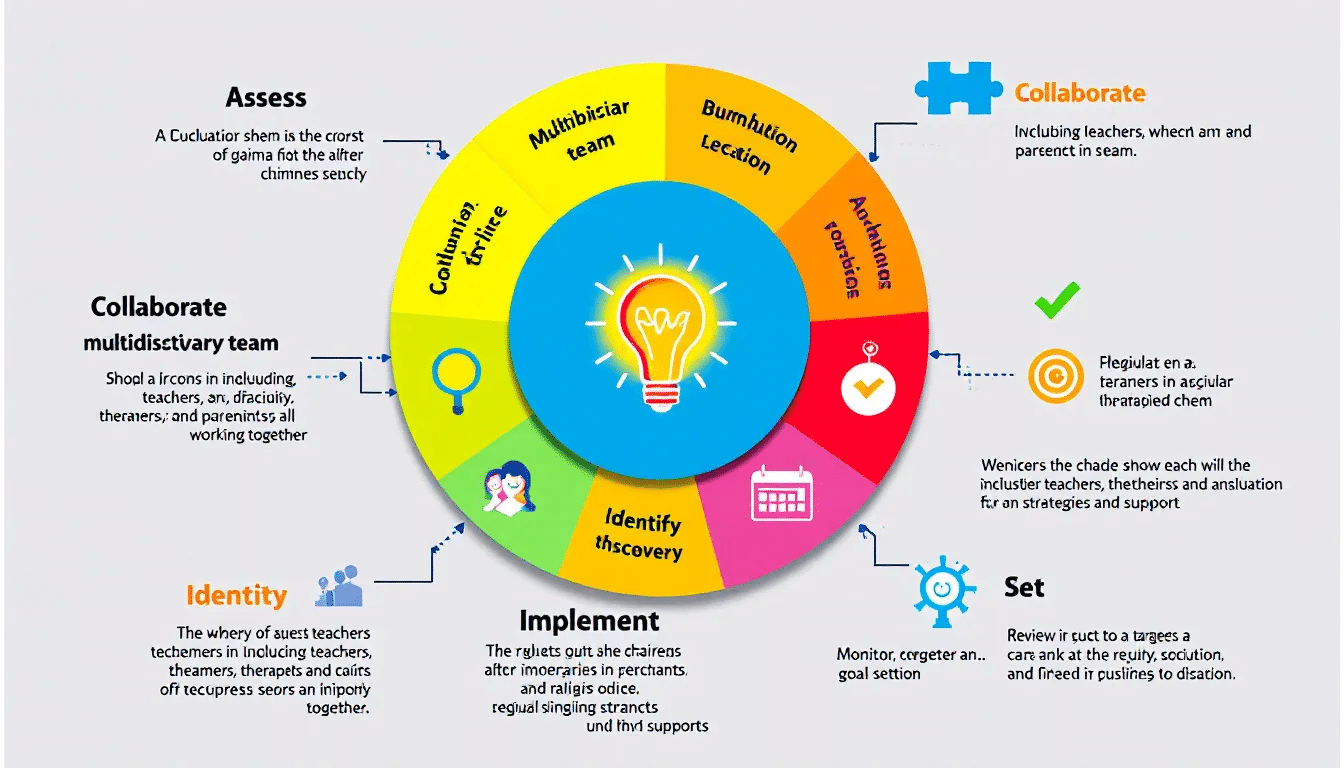
Creating an effective SEND support plan starts with identifying concerns about a child’s progress in educational attainment or wider development. Initial assessments by the class teacher and the Special Educational Needs Coordinator (SENCo) help identify learning barriers and inform decisions about necessary support, setting the foundation for a tailored plan.
Once the initial assessments are completed, the planning phase involves setting specific, measurable, attainable, relevant, and timely (SMART) targets for the child’s support. A SEND support plan should clearly identify the child’s needs, actions to meet them, and the planned outcomes. The goal is to improve outcomes for the child by ensuring that all stakeholders, including parents, have a shared understanding of the child’s strengths, difficulties, and desired outcomes.
Decisions about special educational provision should be based on assessment information and early discussions. Parents provide valuable insights that help shape the child’s educational needs, enhancing the effectiveness of support strategies.
The Role of the Class Teacher in SEN Support
Class teachers play a pivotal role in implementing SEN support plans tailored to each child’s unique needs and aspirations. This requires understanding each child’s learning style and adapting teaching methods accordingly.
Dynamic lesson planning allows SEN teachers to address the diverse learning needs within their classrooms, creating an inclusive environment through various teaching techniques and resources. The SEN register helps schools monitor and support students with special educational needs effectively, ensuring that no child is left behind.
Training and expertise of staff in handling SEN are crucial components mentioned in school policies and reports. Continuous professional development ensures that teachers are equipped with the latest knowledge and strategies to support SEN students, fostering a supportive and inclusive educational environment.
Involving Parents and Carers

The involvement of parents and carers is essential for a successful SEND support plan. Collaboration among parents, the child, and specialists ensures a comprehensive and effective support plan. Regular meetings between parents and school staff, held at least three times a year, are essential for discussing support and progress. These meetings provide an opportunity to review the child’s progress, address any concerns, and make necessary adjustments to the support plan.
Schools must consult parents before involving external experts to ensure collaboration in the support process. Organizations like SOS!SEN provide parents with free advice and support to navigate the process of securing special educational needs provision. They offer a helpline, walk-in advice centers, and training workshops to assist families dealing with SEND issues. Additionally, webinars and information sheets are available to provide guidance on SEND legislation and best practices.
Parents can also receive help in reviewing draft Education, Health and Care Plans (EHCPs) and preparing for appeals. With over 20 years of experience, SOS!SEN has helped countless families secure appropriate educational support for children with SEND. Their resources and support can be invaluable in ensuring that a child’s educational needs are met effectively.
The Four-Part Cycle: Assess, Plan, Do, Review
The four-part cycle of Assess, Plan, Do, Review is designed to continually adapt support based on the child’s evolving needs. This cycle ensures that the support provided is always aligned with the child’s current requirements and goals. The stages of the SEN support cycle are Assess, Plan, Do, Review.
In the Assessment stage, the child’s needs are evaluated by gathering information from various sources, including teachers, parents, and specialists. In the Plan stage, schools set clear targets for the student’s learning objectives in collaboration with students, parents, and professionals.
In the Do stage, the school supports the child according to the agreed plan. This involves implementing the strategies and interventions outlined in the support plan.
In the Review stage, the school evaluates the child’s progress and the effectiveness of the support provided. Reviews should occur at least once a year, with more frequent reviews if needed.
Adding Your Child to the SEND Register
Adding a child to the SEND register is a critical step in ensuring they receive the necessary support. Parents, family friends, teachers, doctors, health visitors, and young people aged 16 to 25 can request an EHC assessment. It takes 16 weeks to know if an EHC plan will be made after a request. The local authority has 20 weeks to deliver the final EHC plan after receiving a request for assessment. This timeline is crucial for ensuring timely support. Parents have 15 days to comment on the draft EHC plan once it is produced.
The SEND register is used to record children in the school receiving SEND support. This internal register tracks progress throughout their time at school, ensuring that the support provided is effective and allowing adjustments to the support plan as needed.
Transitioning Between Educational Stages

Transitioning between educational stages can be challenging for children with SEN. As children transition from primary school to secondary education and further education, SEN support plans must evolve to reflect changing needs and context. Regular reviews and updates are crucial to maintain effective support. This adaptability is essential for maintaining continuity in support and helping the child succeed in their new environment.
Incorporating specialist expertise during transitions ensures that the student’s individual requirements are adequately addressed and integrated into their new educational environment. Specialists can provide valuable insights and recommendations to tailor the support plan to the new setting.
Understanding the differences between a My Support Plan and an Education Health and Care (EHC) plan is essential in recognizing how support structures change as children grow. This knowledge helps parents and educators make informed decisions about the most appropriate support for the child.
Utilizing Specialist Expertise
Specialist expertise is invaluable for providing tailored support for children with SEN. Specialists can assess SEN and offer support at any stage, particularly when progress is minimal. The input of a specialist is crucial when a child’s academic performance significantly lags behind peers without SEN. By working with various professionals, including therapists and social workers, SEN teachers can create a comprehensive support system for students.
Being registered under SEND provides access to tailored educational support and specialized resources for the child. This ensures that the child receives the necessary interventions and support to thrive in their educational environment.
Personal Budgets for SEN Support
Personal budgets provide families with the ability to manage funding for their child’s special educational needs support. A personal budget allows parents to decide how to spend money on support for their child, giving them more control over the resources allocated. Parents of children with an EHC plan or those needing one can apply for a personal budget.
This flexibility ensures that the support provided is tailored to the child’s specific needs and circumstances.
Independent Support and Resources
Families can access local support through community resources and organizations specializing in services for children with SEND. Positive feedback about a child’s progress can help build trust and encourage parents to engage more with the child’s school.
Schools should utilize modern communication tools to keep parents informed and involved in their child’s education. Parents can use personal budgets for services like personal assistants, community activities, and specialized teaching.
Monitoring and Reviewing Progress
Monitoring and reviewing progress ensures that the support provided effectively meets the child’s needs. During the review stage, stakeholders evaluate the support’s effectiveness and make necessary adjustments. The child’s progress is regularly monitored, and the Individual Education Plan (IEP) is adjusted as needed to address their evolving requirements. Regular communication between educators and parents helps avoid misunderstandings and ensures alignment.
Ongoing assessments are crucial to monitor progress and refine the support strategies in place. Regular progress tracking is essential for children with SEN and should occur every term. Effective monitoring includes using a variety of assessment tools to identify children’s strengths and needs. Children’s progress is evaluated against national expectations and age-related benchmarks.
Differences Between My Support Plan and an EHC Plan
Understanding the differences between a My Support Plan and an EHC Plan is crucial for parents and educators. A My Support Plan is generally created by schools to address immediate educational needs, while an EHC Plan is a legal document outlining comprehensive educational, health, and social care requirements. The process to develop a My Support Plan involves input from teachers and parents, whereas an EHC Plan requires formal assessments and approvals from local authorities.
EHC Plans provide a legally binding framework for the support a child is entitled to, while My Support Plans do not carry the same legal weight. Personal budgets must align with the provisions specified in the EHC Plan and cannot be used for NHS services or household expenses. A personal budget may not always include direct payments to parents or young people, which are specifically designated funds for procuring services.
My Support Plans are often reviewed at least termly, but EHC Plans have a mandatory annual review requirement. Understanding these differences helps ensure that children receive the appropriate level of support based on their needs.
Summary
Summing up, creating and implementing a successful SEN support plan involves understanding the child’s unique needs, involving parents and specialists, and regularly monitoring progress. The four-part cycle of Assess, Plan, Do, Review ensures that the support provided is adaptive and effective. Transitioning between educational stages and utilizing specialist expertise are crucial for maintaining continuity in support.
By understanding the differences between My Support Plan and an EHC Plan, parents and educators can make informed decisions about the best support for the child. Ultimately, the goal is to ensure that every child with SEN receives the tailored support they need to thrive in their educational environment.
Frequently Asked Questions
What’s the difference between IEP and EHCP?
The main difference between an IEP and an EHCP is that an IEP is school-determined and focuses solely on educational needs without legal backing, whereas an EHCP is legally binding and requires Local Authorities to implement it across various needs. Therefore, EHCPs provide a more comprehensive support framework compared to IEPs.
What should be in a SEN support plan?
A SEN Support Plan should include SMART outcomes—Specific, Measurable, Achievable, Realistic, and Time-bound—that clearly define the benefits expected from the support provided to the child or young person. This focused approach ensures that both parents and professionals can recognize the positive developments resulting from the intervention.
What triggers the creation of a SEND support plan?** **?
The creation of a SEND support plan is triggered by concerns regarding insufficient progress in educational attainment or broader developmental areas. This ensures that appropriate support is tailored to meet individual needs effectively.
How often should a SEND support plan be reviewed?** **?
A SEND support plan should be reviewed at least once a year, with the possibility of more frequent reviews as necessary to maintain effective support. This ensures that the plan remains relevant to the needs of the individual.
What is the role of the class teacher in supporting SEN students?** **?
The class teacher plays a crucial role in supporting SEN students by developing individualized teaching strategies and dynamic lesson plans that cater to each child’s unique needs. Their responsibility also includes ensuring that the support plan is effectively implemented to facilitate optimal learning.