Are you a teaching assistant looking for practical tips to excel in your role? This article outlines the essential do’s and don’ts for teaching assistants. Understanding what to do and what to avoid can make you more effective and impactful in the classroom. Read on to find clear guidelines that will help you navigate your responsibilities and support your students effectively.
Key Takeaways
- Understanding your role and responsibilities as a teaching assistant is vital for providing effective classroom support and contributing to student success.
- Building strong relationships with students enhances their learning experience and boosts engagement, while effective communication with teachers fosters collaboration.
- Flexibility, proactivity, and maintaining professionalism are essential for creating a supportive learning environment and encouraging student independence.
The Importance of Understanding Your Role
Grasping your teaching assistant role as a teaching assistant is vital for offering effective classroom support. Knowing your responsibilities and their place within the educational setting is essential. Clarity in roles and responsibilities allows you to contribute significantly to classroom dynamics and student support, making you an invaluable resource.
Collaboration is pivotal for exceptional teaching, with well-managed assistants greatly influencing students’ learning experiences and outcomes. Properly utilizing teaching assistants positively impacts student achievement, making your role crucial in supporting children’s learning access.
Although teaching assistants often face financial recognition that doesn’t match their value, remember that your contributions are integral to the school environment, often making you the unsung heroes of education. Approach your role with pride and dedication.
Building Strong Relationships with Pupils

Strong relationships with pupils are fundamental to effective teaching assistance. Teaching assistants significantly address diverse student needs through these relationships. Positive interactions between teaching assistants and students greatly enhance the overall learning environment.
Actively showing appreciation and respect towards students helps create a supportive atmosphere. Engage with them and foster relationships to maintain a positive environment. Use body language effectively to boost engagement and support classroom communication.
Using humor appropriately can establish rapport and create a more enjoyable learning atmosphere. Building rapport with students enhances their learning experience and boosts their confidence and motivation to participate in class activities.
Effective Communication with Teachers
Effective communication with teachers is crucial for successful collaboration and better educational outcomes. Clear and consistent communication helps teaching assistants understand the teacher’s expectations and effectively support classroom activities.
Collaborating with lead teachers enhances your ability to adapt to student needs. Regular feedback improves the working relationship between teaching assistants and teachers, resulting in better educational outcomes. It’s important to communicate before lessons to enhance flexibility in addressing daily challenges.
A skilled teaching assistant can greatly relieve teachers’ workloads by managing various classroom tasks. Teach effective communication with both teachers and students to meet your fundamental job responsibilities.
Being Proactive in the Classroom
Proactivity in the classroom is essential for enhancing dynamics and supporting learning. Effective teaching assistants adapt strategies based on classroom dynamics and individual student needs. Anticipating students’ needs significantly enhances classroom management.
Stay observant to identify students needing extra support. Use effective behavior management techniques that align with school policy to handle challenging situations. Helping with grading and feedback can lighten the teacher’s workload and contribute to a more organized learning environment.
Proactivity means anticipating situations, not just reacting to them. This approach creates a dynamic and supportive classroom environment that is present and caters to various learning styles.
Encouraging Student Participation
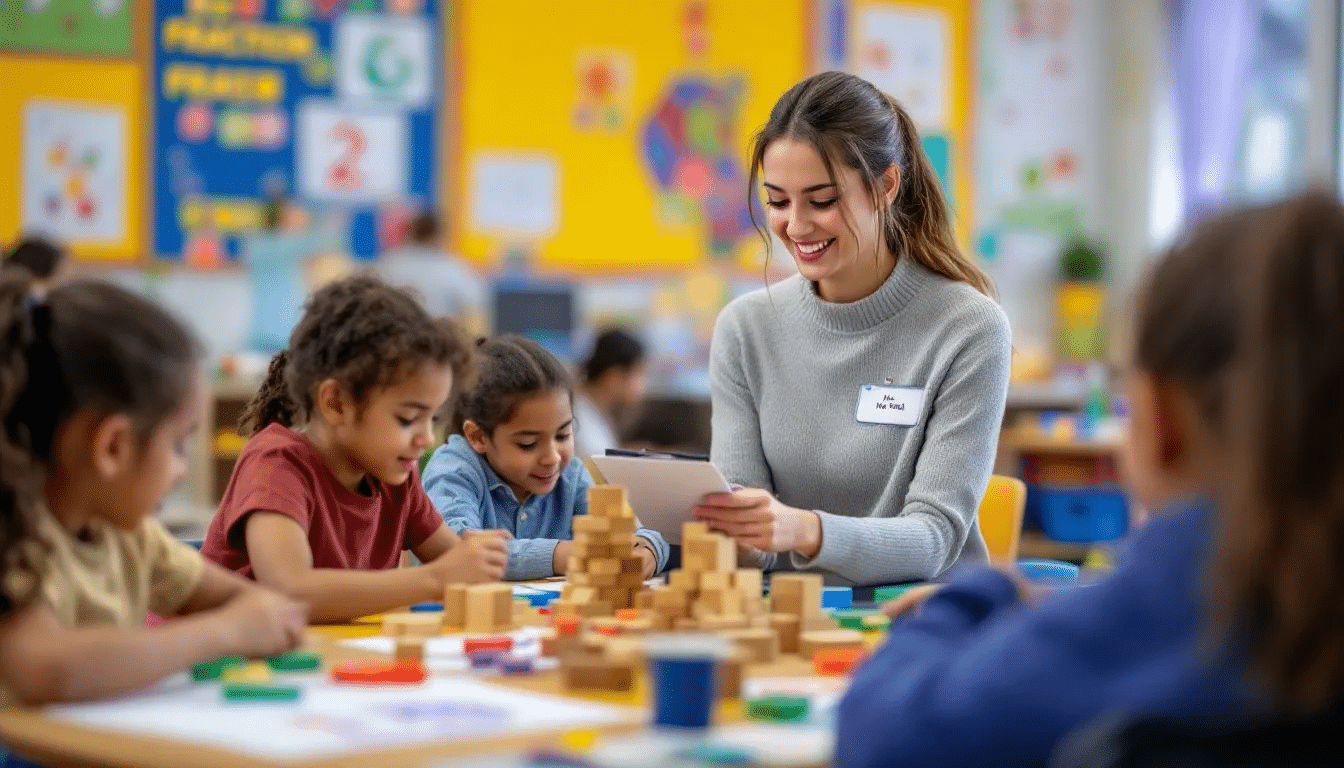
Encouraging student participation is a highly rewarding aspect of being a teaching assistant. Contributing to a nurturing classroom environment and providing emotional support can significantly enhance student involvement. Creating a safe and inclusive environment fosters student participation, with clear expectations and positive reinforcement building confidence.
Forming strong bonds with pupils improves their engagement and motivation in the classroom. Regular feedback and encouragement make students feel valued and motivate them to contribute more actively in class. Engaging with students during lessons fosters better participation and understanding in schools.
Use various techniques to encourage participation, such as hand signals, collaborative learning activities, and small group discussions. The think-pair-share technique and posing open-ended questions promote deeper thinking and elicit more detailed student responses, enhancing classroom discussions. Additionally, it is important to discuss these strategies with fellow educators to maximize their effectiveness, as they have talked about their experiences with these methods and speak about their benefits.
Flexibility and Adaptability
Flexibility and adaptability are crucial skills for teaching assistants to support different learning styles and achieve educational goals effectively. Be prepared to adjust your role to meet diverse needs and unexpected situations in the classroom. Offering tailored support through small group interventions meets diverse student learning needs.
Adaptability is key for managing various tasks efficiently, from lesson preparation to handling classroom dynamics. Flexibility ensures all students reach their full potential and receive support in their learning journey.
Being adaptable also means being aware of your responsibilities and ready to tackle any challenges that arise. This approach builds confidence and enhances effectiveness as a teaching assistant deployment, even if you assume you are afraid of the unknown, as it is a skill that is taught through experience.
Seeking Help and Professional Development
Seeking help and ongoing professional development are vital for teaching assistants to enhance their skills and support learning. Access online CPD units focused on special educational needs and disabilities (SEND) through government-funded resources. Engage in networking events and educational webinars covering topics relevant to your role, including attending workshops, pursuing online courses, and teaching assistant deployment.
Use available toolkits containing free resources and guidance on professional development and training opportunities. Practice self-evaluation to continuously enhance your professional skills. Continuously seek guidance, advice, and training opportunities, including workshops, to further develop your skills.
Professional development is an ongoing journey. Staying updated with the latest educational trends and techniques will enhance your subject knowledge and make you more effective in the field of science.
Avoiding Over-Support
Avoiding over-support is key to fostering student independence and self-reliance. Excessive help from teaching assistants can make students dependent and less self-reliant. Focus on fostering their ability for problem solving independently rather than providing more support.
Encouraging struggling pupils to develop their coping strategies is vital for their growth and confidence as a child. Avoid doing tasks for students, as this hinders their ability to learn independently. Balancing support and independence helps students develop essential life skills and confidence in their abilities.
Your role is to guide and support, not to do the work for students. This approach ensures they develop the necessary skills to tackle challenges independently.
Maintaining Professionalism
Maintaining professionalism is crucial for teaching assistants to establish authority and respect in the classroom. Show professional behavior by respecting the ethos and policies of the school. Maintain confidentiality and safeguard students’ well-being in all interactions.
Professionalism in interactions with students, teachers, and support staff is key to creating a positive and effective learning environment. Handling challenging situations appropriately and maintaining a professional demeanor enhances your credibility and effectiveness.
Remember that your behaviour sets an example for children and students, and maintaining professionalism is a key element to rules achieved your classroom responsibilities and goals in reality.
Dos and Don’ts Recap
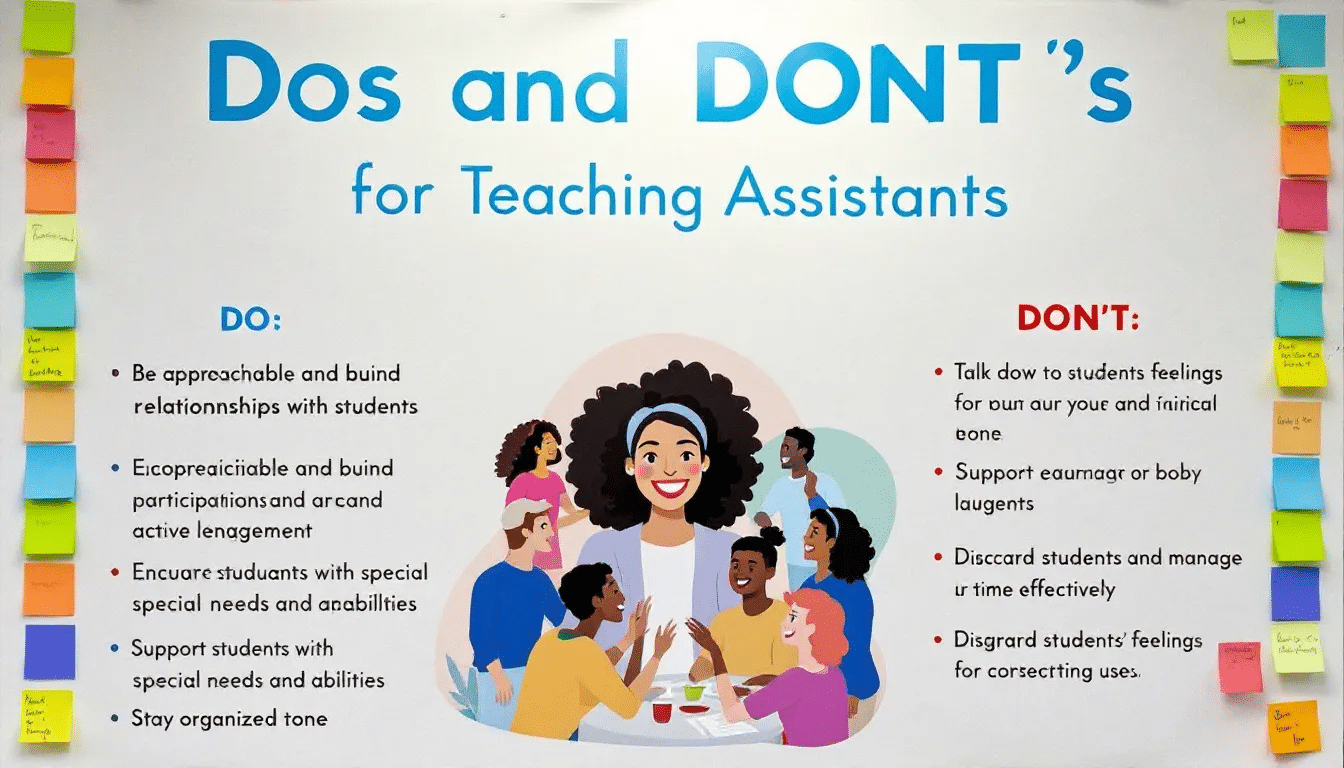
Knowing your responsibilities and how you fit into the classroom environment is crucial for teaching assistants. Build strong relationships with students to effectively support their learning. Clear and consistent communication with teachers is vital for successful collaboration.
Be proactive in anticipating needs and manage classroom dynamics. Create an environment where students feel comfortable participating and are encouraged to engage. Be flexible and adaptable to various learning styles and classrooms situations.
Recognize the negative impact of over-supporting students and promote their independence. Maintain professionalism in all interactions and handle challenging situations properly. Following these dos and don’ts helps you become an outstanding teaching assistant and make a significant impact in the classroom.
Summary
In summary, the role of a teaching assistant is multifaceted and requires a deep understanding of responsibilities, effective communication, and the ability to build strong relationships with pupils. By being proactive, flexible, and continuously seeking professional development, you can significantly enhance the learning environment and support students’ educational journeys.
Avoiding over-support and maintaining professionalism are also critical aspects of the role. These elements ensure that students develop independence and that you establish authority and respect in the classroom.
Remember, your contribution as a teaching assistant is invaluable. Embrace your role with commitment and passion, and you will make a lasting impact on the lives of many children.
Frequently Asked Questions
Why is understanding my role as a teaching assistant important?
Understanding your role as a teaching assistant is important because it enables you to effectively support students, enhance classroom dynamics, and positively influence learning outcomes. Recognizing your responsibilities ensures you can fulfill your potential in this pivotal position.
How can I build strong relationships with pupils?
To build strong relationships with pupils, demonstrate appreciation and respect, engage with them actively, and maintain positive body language. Utilizing appropriate humor can also help foster a supportive atmosphere.
What are the best ways to communicate with teachers effectively?
Effective communication with teachers involves clear and consistent dialogue, providing regular feedback, and addressing expectations upfront. This collaborative approach fosters understanding and helps navigate daily challenges more efficiently.
How can I encourage student participation in the classroom?
Encouraging student participation begins with fostering a safe and inclusive environment. Implement regular feedback, collaborative activities, and open-ended questions to engage students effectively.
Why is maintaining professionalism important for teaching assistants?
Maintaining professionalism as a teaching assistant is crucial because it establishes authority, respects school policies, and safeguards students’ well-being. By setting a positive example, you enhance your credibility and foster a respectful learning environment.